
Setting Up a Hair Salon: Checklist, Costs and Planning Step by Step
Setting up a hair salon – from space planning through furniture and technology to costs. The complete checklist for founders and salon owners, straight from practice.
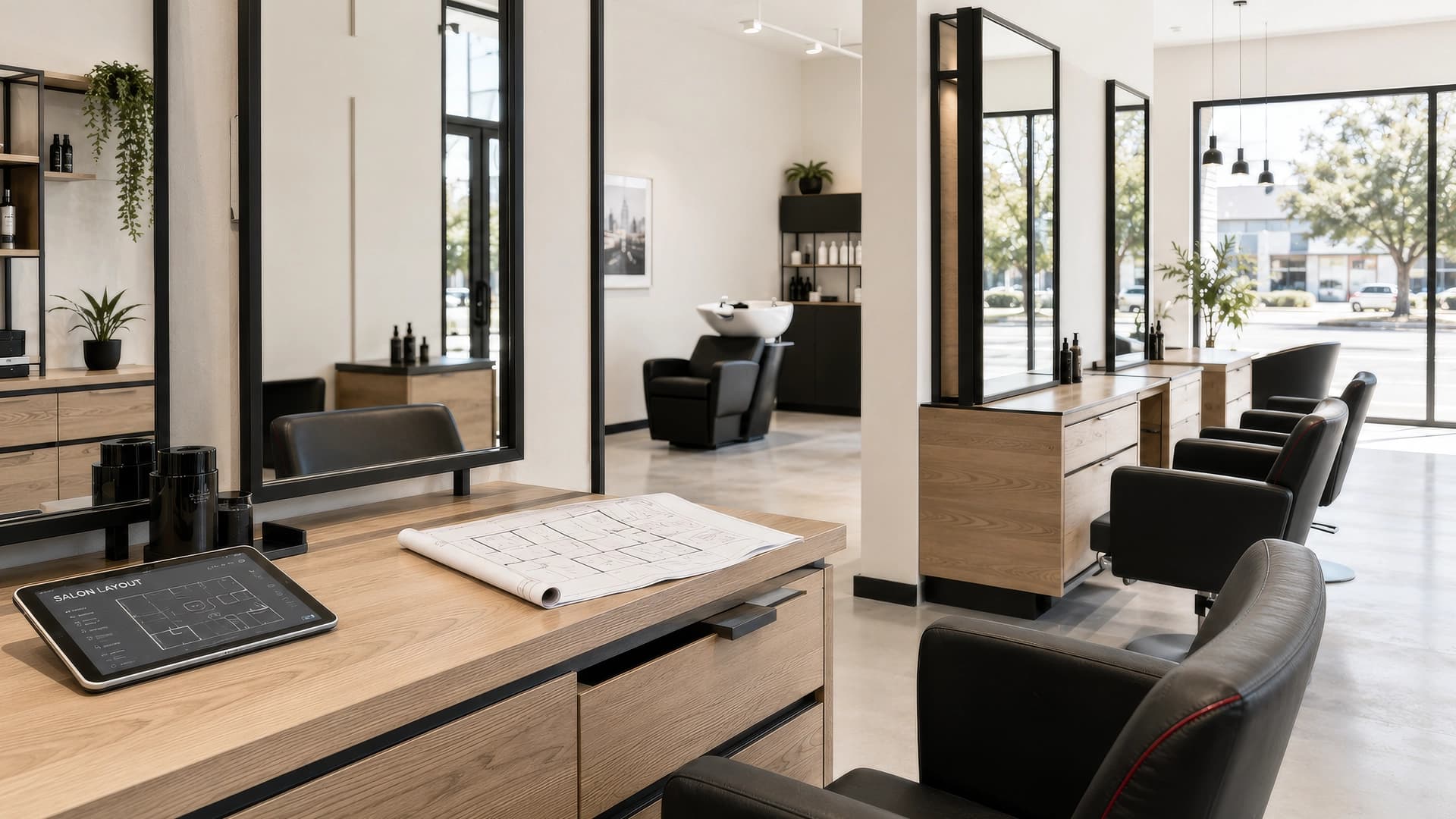
Setting up a hair salon means more than putting up a few chairs and mirrors. Anyone opening or refurbishing a salon makes decisions that shape the working day, the running costs and the customer experience for years. This guide sums up what really matters in the planning – as a field-tested checklist for founders, master hairdressers and existing businesses that are modernising.
1. Space concept and floor plan first
Before the first piece of furniture is ordered comes the floor plan. The central question: how many styling stations can the space carry without becoming cramped? As a rough guide, allow around 4–6 m² per styling station including circulation space, plus additional room in the washing area for backwash basins and comfort recliners.
Plan these zones cleanly separated:
- Reception and waiting area – the first impression, often underrated
- Styling stations – enough spacing, good light, clear mirror sightlines
- Wash service – ergonomic backwash units, short routes to the styling station
- Technical and storage room – colours, supplies, equipment, lockable
- Staff and break area – break room, cloakroom, sanitary facilities
The most common planning mistake arises here: as many styling stations are drawn in as fit geometrically – not as many as can be served comfortably. A salon that feels calm when two-thirds full sells more than one that looks crowded at full occupancy. Think about traffic routes too: colour mixing, the washing area and the styling station should be reachable without constantly crossing paths.
2. Essential equipment at a glance
| Area | Equipment |
|---|---|
| Styling station | Hairdressing chair, mirror console, trolley, lighting |
| Wash service | Backwash unit with basin, hand shower, neck cut-out |
| Reception | Reception counter, point-of-sale system, waiting furniture |
| Technology | Air conditioning, enough power sockets per station, water connections |
| Hygiene | Sterilisation, hand-washing station, disposal concept |
When choosing furniture, what counts is not the catalogue price but the condition after three years. Hairdressing-chair hydraulics, upholstery and backwash-unit joints are the parts that give way first in continuous use – this is where higher quality pays off, while you can save on purely decorative elements. Also make sure each styling station has colour-true, sufficiently bright lighting: a colour consultation under light that is too warm or too dim leads to complaints that no furniture discount can offset.
3. Electrics, water and climate – the trades that get expensive
The biggest cost drivers are rarely the chairs, but the building trades. Each styling station needs enough sockets for the hairdryer, straightener and devices at the same time; the washing area needs suitable supply and drainage lines as well as enough hot water for several basins running in parallel. Air conditioning and ventilation are often underrated in the initial planning – in a full salon with hairdryers running, it is not a luxury but a prerequisite for a comfortable atmosphere.
Coordinating these trades early with the fit-out concept saves expensive rework later. Anyone who plans the electrics and water before the furniture positions are fixed will almost inevitably install connections in the wrong place.
4. What does it cost to set up a hair salon?
The costs depend heavily on the area, the number of stations and the level of fit-out. As realistic line items for the fit-out (excluding rent and deposit):
| Item | Range |
|---|---|
| Styling station (chair, console, mirror) | mid-range to premium per station |
| Wash service | depending on comfort and number |
| Reception and waiting area | depending on size and material |
| Electrics, water, flooring, painting | structural condition is a major factor |
| Initial stock of hairdressing supplies | colours, care, tools, consumables |
The most reliable cost framework comes not from blanket lists, but from a site visit with measurements taken on the spot. A well-thought-out concept from a single source prevents the interfaces between tradespeople from becoming expensive – every additional party is an additional handover point where deadlines and costs can tip over.
5. A realistic timeline
From the first sketch to the opening, several weeks to months pass depending on the scope. Build in a buffer for furniture delivery times, tradespeople's appointments and official matters. A common mistake: announcing the opening date before the supply reliability of the fit-out is secured. Marketing, staff start and opening should hinge on the realistic delivery date – not the other way around.
6. Typical mistakes when setting up a salon
- Too many styling stations in too little space – feels crowded
- Washing area ergonomically underrated – strains the team every day
- Lighting too cool or too dim – distorts colour results
- Storage planned too small – supplies end up in the styling area
- Trades awarded individually – no one is responsible for the overall result
- Initial stock forgotten – the salon is set up, but colour and care are missing on opening day
7. Think about fit-out and initial stock together
One point that almost always comes too late in the planning: on opening day, not only must the furniture be in place, it must also be possible to work. Coloration, care lines, styling, tools and consumables belong in the same project plan as the furniture – otherwise a perfectly fitted salon opens with no colour in stock. Anyone who covers both the fit-out and the ongoing hairdressing supplies through the same partner saves not just on ordering effort, but also on coordinating between several supply chains.
Frequently asked questions about setting up a hair salon
How much does it cost to set up a hair salon? The range is wide and depends on the area, the number of stations and the structural condition. The biggest items are usually the building trades (electrics, water, climate) and the washing area – not the chairs. Measurements taken on site provide a more dependable framework than any blanket list.
How much space does a styling station need? As a guide, around 4–6 m² per styling station including circulation space, plus separate room for the washing area. Better to plan generously: stations placed too close together cost comfort and effect every day.
How long does it take to set up a hair salon? Depending on the scope, from a few weeks to several months. Furniture delivery times and coordinating tradespeople are the longest items – plan the opening date around them, not the other way around.
Is it worth awarding the fit-out to a single supplier? In most cases, yes. Every additional party is an additional interface for deadlines, costs and responsibility. A single point of contact for planning, furniture, installation and initial stock reduces exactly this friction.
From a single source instead of many
It is precisely at the interface problem that an fit-out project either stays within budget or doesn't. That is why we at Saykos plan salon fit-outs from the empty room to handover as a single project – including the matching initial stock of hairdressing supplies, so that on opening day not only the furniture but also the work is ready.
If you have a concrete project ahead of you, a site visit with measurements is the fastest route to a dependable cost framework – with no obligation, via the contact form. How to choose the right wholesale partner for your ongoing supplies afterwards is covered in the article Buying hairdressing supplies from a wholesaler.